

What Are Printing Inks?


CMYK
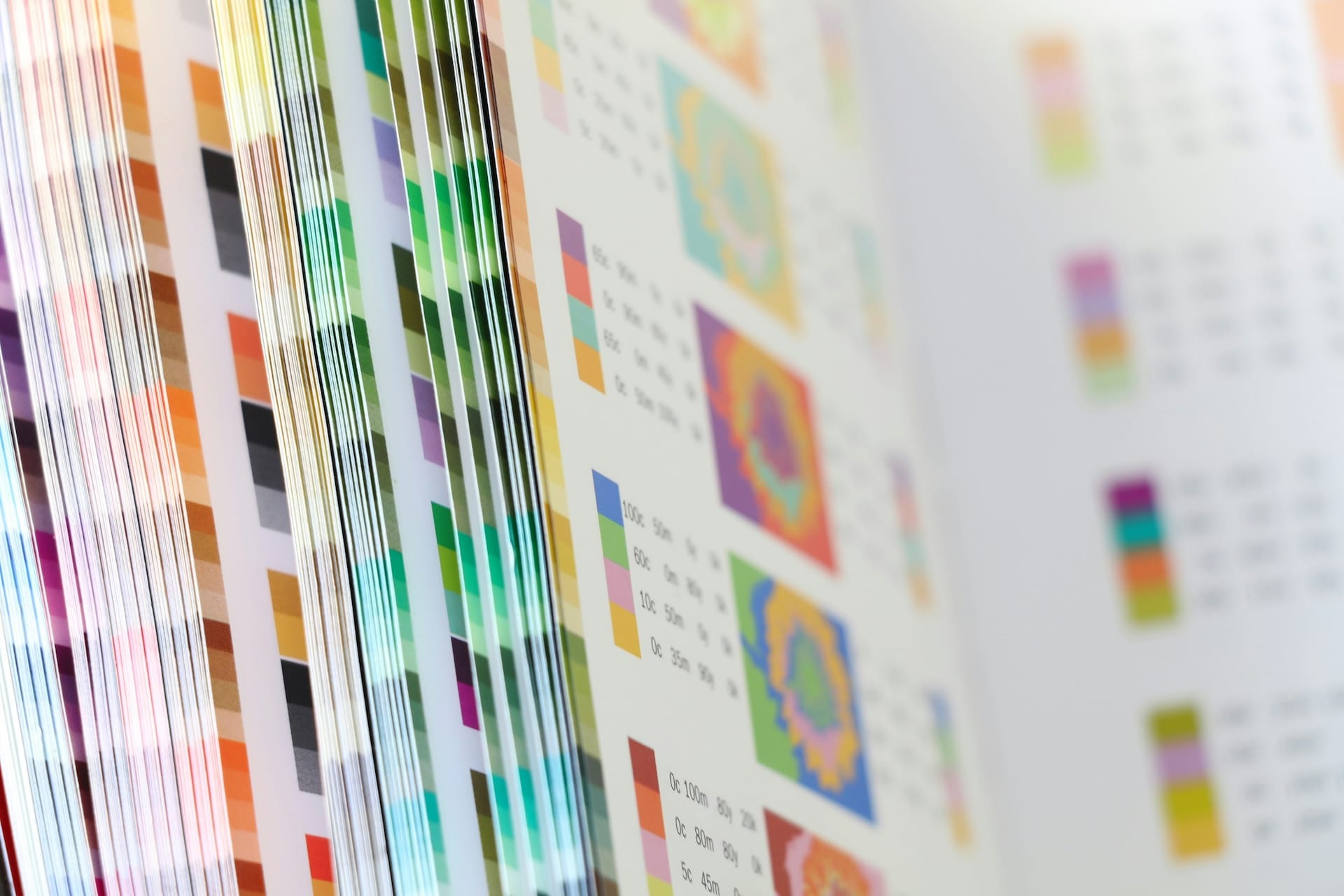
CMYK is THE colour model used in process printing. The letters stand for the four main colours used in printing: Cyan, Magenta, Yellow and Black. Inks are produced at various printing ink manufacturing sites and stored in either bulk containers or small cans to be shipped to customers. An additional method of full-colour printing is six-colour process printing, which adds orange and green to the traditional CMYK inks for a larger and more vibrant colour range. But that’s just two more.
So, it sounds like printing ink manufacturing should be easy, then! Nothing could be further from the truth.


Did you know?
Printing inks, coatings and varnishes are mixtures manufactured from combinations of colourants (pigments and dyes), binders, solvents and additives.
A broad raw material base is vital for this wide variety of formulations, and this is especially true for the additives, which, although they are used in comparatively small quantities, are essential for an ink to meet its required converting characteristics. It is in this area that the specific know-how and intellectual property of individual ink manufacturers lie.
The raw materials may be single chemical substances, but are more likely mixtures of a number of different substances, which results in inks typically containing between 20 and 60 unique chemical compounds!

Conventional inks
For many centuries, inks have been either solvent-based or oil-based. Those traditional printing inks consist of pigments or dyes suspended in a liquid solvent or oil carrier. These inks dry through absorption or evaporation of the solvent, leaving the pigment behind on the substrate.
Usually, these inks can adhere well to a wide range of substrates; their adhesion and durability may vary depending on the surface properties and the type of solvent or oil carrier used.
Traditional solvent-based inks contain volatile organic compounds (VOCs) to accelerate drying; therefore, printing processes are nowadays equipped to ensure solvent recovery or burning to avoid VOCs being emitted.
For some printing processes, water-based inks where the VOC solvents are substituted by mainly water were considered as an alternative. The interest in these ink systems started off in the 1960s due to the requirements of environmental protection and the shortage of petroleum raw materials. These early inks had some disadvantages, such as poor gloss, poor water resistance, poor adhesion, easy foaming and
poor storage stability. In the 1970s, due to the oil crisis, raw materials for printing ink became tight again, and at the same time, several countries legislated to control air quality, limit the emission of volatile organic compounds (VOCs) into the atmosphere, and limit the heavy metal content and residual solvents of packaging products with strict hygienic conditions.
Ink development entered a new stage and a second generation of water-based ink with new chemistry for the binder systems came on the market, making up for the poor water resistance and storage stability of the first generation, still with a gap in gloss and printability. In the meantime, gloss and dryness of inks have been further improved. It needs to be noted that it is not possible to use solvent-free printing inks in all printing processes.
Additionally, water-based or solvent-based printing inks can be found in liquid or paste forms.
Regardless of being solvent or water-based, conventional printing inks are versatile and can be used in all printing processes, including digital and on many substrates.
Energy curing printing inks
In the late 1960s, UV (ultraviolet) and EB (electron beam) curing inks were invented based on a different drying process that does not require (solvent) evaporation.
New equipment was needed to safely cure these inks on presses, which involved UV lights or electron beams with new elastomer materials for rollers and blankets.
UV-curable inks are composed of liquid monomers, oligomers, pigments, photoinitiators, and other additives. Unlike regular inks, UV inks remain in liquid form until exposed to ultraviolet (UV) light, which initiates a rapid, if not instant, curing process, transforming the ink into a solid polymer film. This rapid curing process eliminates the need for drying time and allows for immediate handling of printed materials, increasing production efficiency.
EB inks do not require a photoinitator to begin the polymerisation process. High-energy electrons interact directly with the oligomers and monomers. It needs to be noted that equipment costs are much higher for these print systems.
All UV and EB inks use a balance of oligomers and monomers to meet the desired properties of the ink. They offer excellent adhesion to various substrates, including paper, plastic, metal, glass and wood. Once cured, UV inks form a durable, abrasion-resistant coating that is highly resistant to fading, scratching, and chemical exposure.